Making low-cost microelectrode arrays
by Yoyo and Eigenlucy • 01-01-2025 #lab equipment #neuroscience #experimentalist-confetti
Motivation: Neuronal headstages bottlenecked researchers
2025 was full of startup hype about neuron computers. At Frontier Tower's neurotech floor, friends were discussing biological neuronal responses to nootropics and neuropeptides. However, the neuronal headstages were hard to get. Student clubs e.g. UC Berkeley didn't rent them out, nor did neurotech startups e.g. Science.xyz.
For reference, a single microelectrode array of 59 channels from multichannel systems costs $300. Not to mention, integrated neuronal headstage setups from Axion biosystems cost $10 - $50k.
Thus, we experimented with building a cheap MEA, and so far graphene version costs <1$ and 5.5 min per unit.
We tested 3 laser deposition techniques
- Laser-induced graphene
- Aluminum vapour deposition
- Copper metalization We've looked into laser ablation: Indium tin oxide. This was not tested but may also be worth a shot.
Designing an MEA
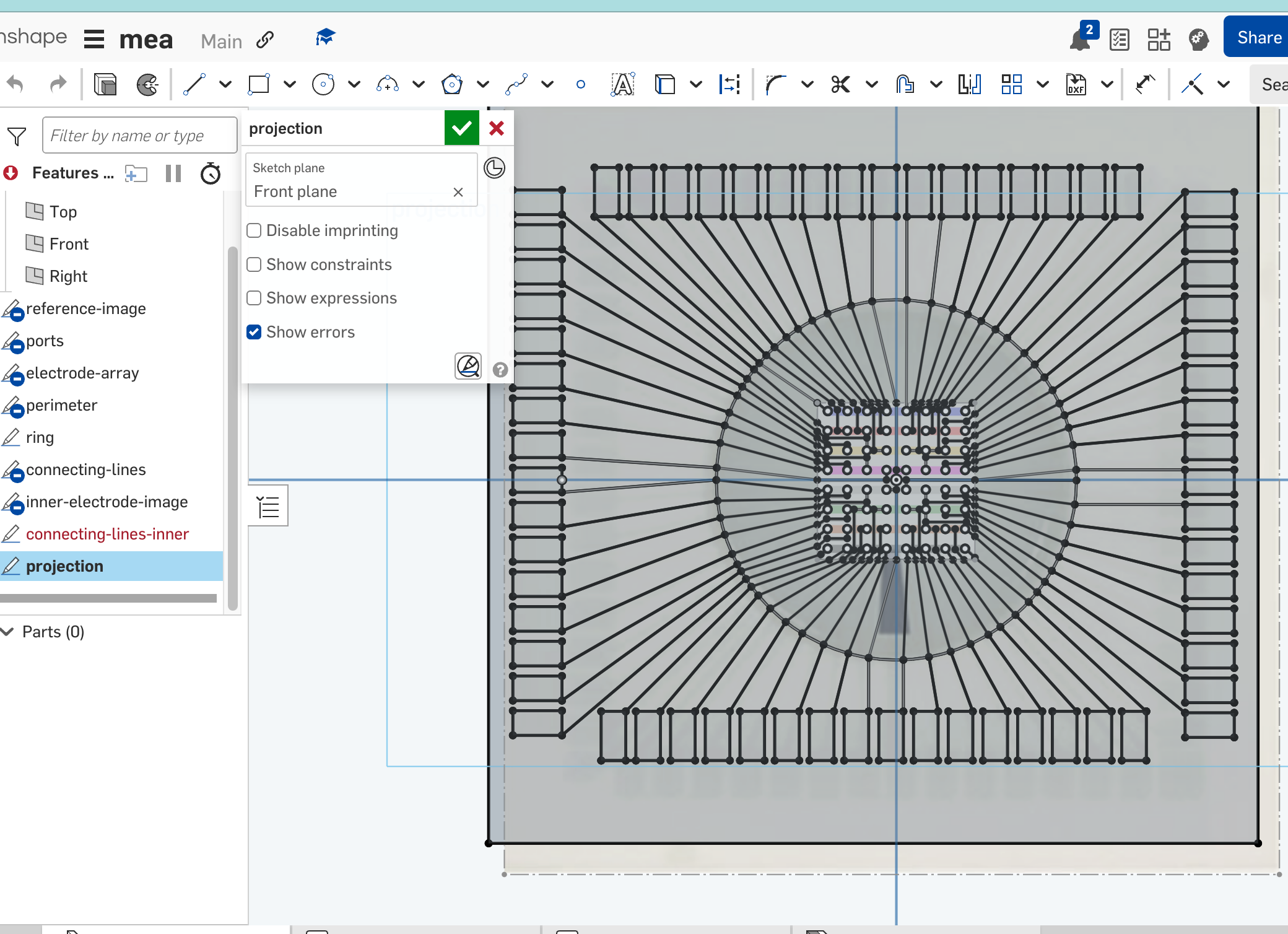
Iteration 1: OnShape.
Created at ~12 am from circles and linear patterns. I found out this shortcircuited, since I naively traced the well as a ring, so I created version 2!
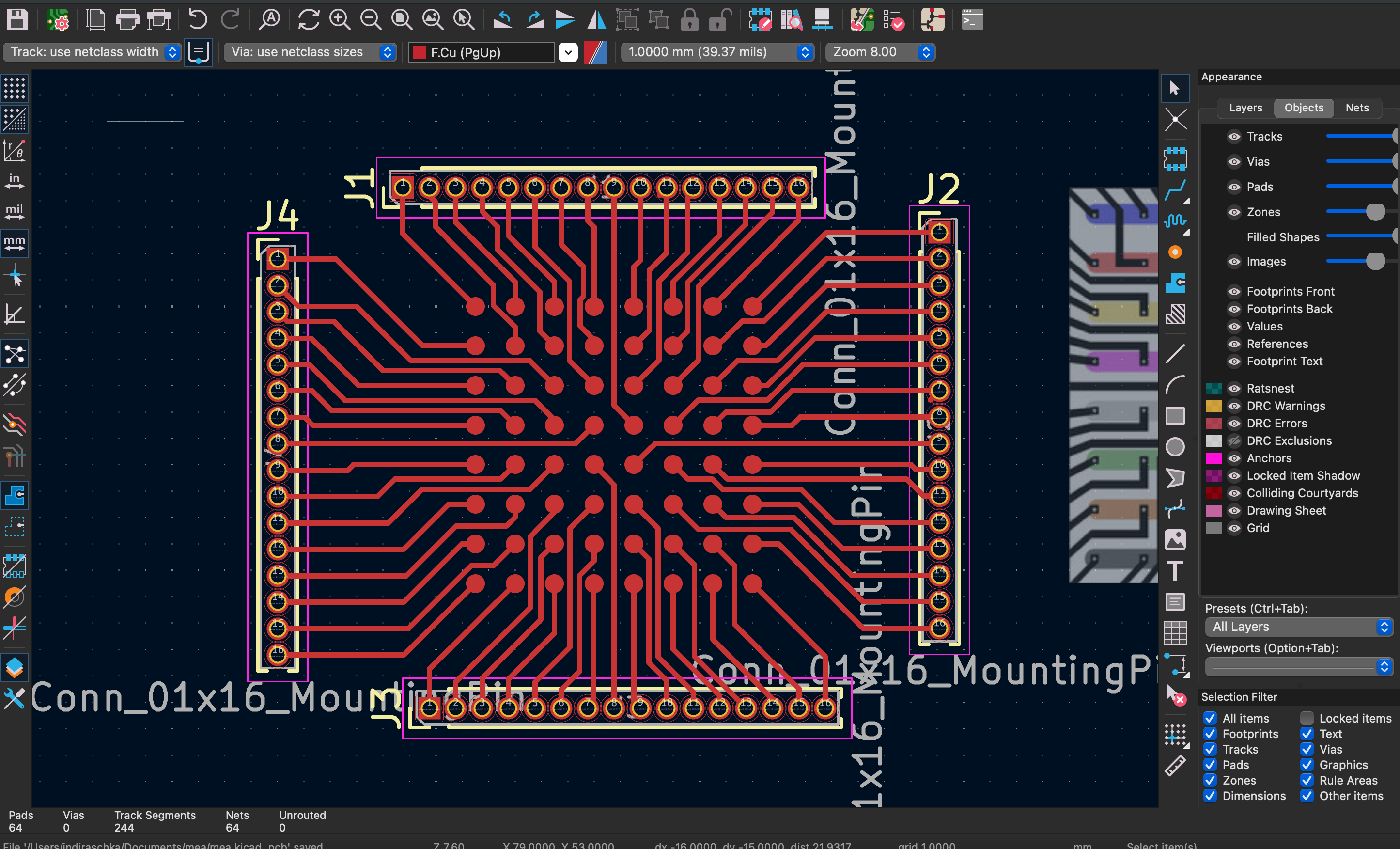
Iteration 2. The improved MEA in KiCad.
This dotted grid directly come into contact with neurons, and extend out to the peripherals.
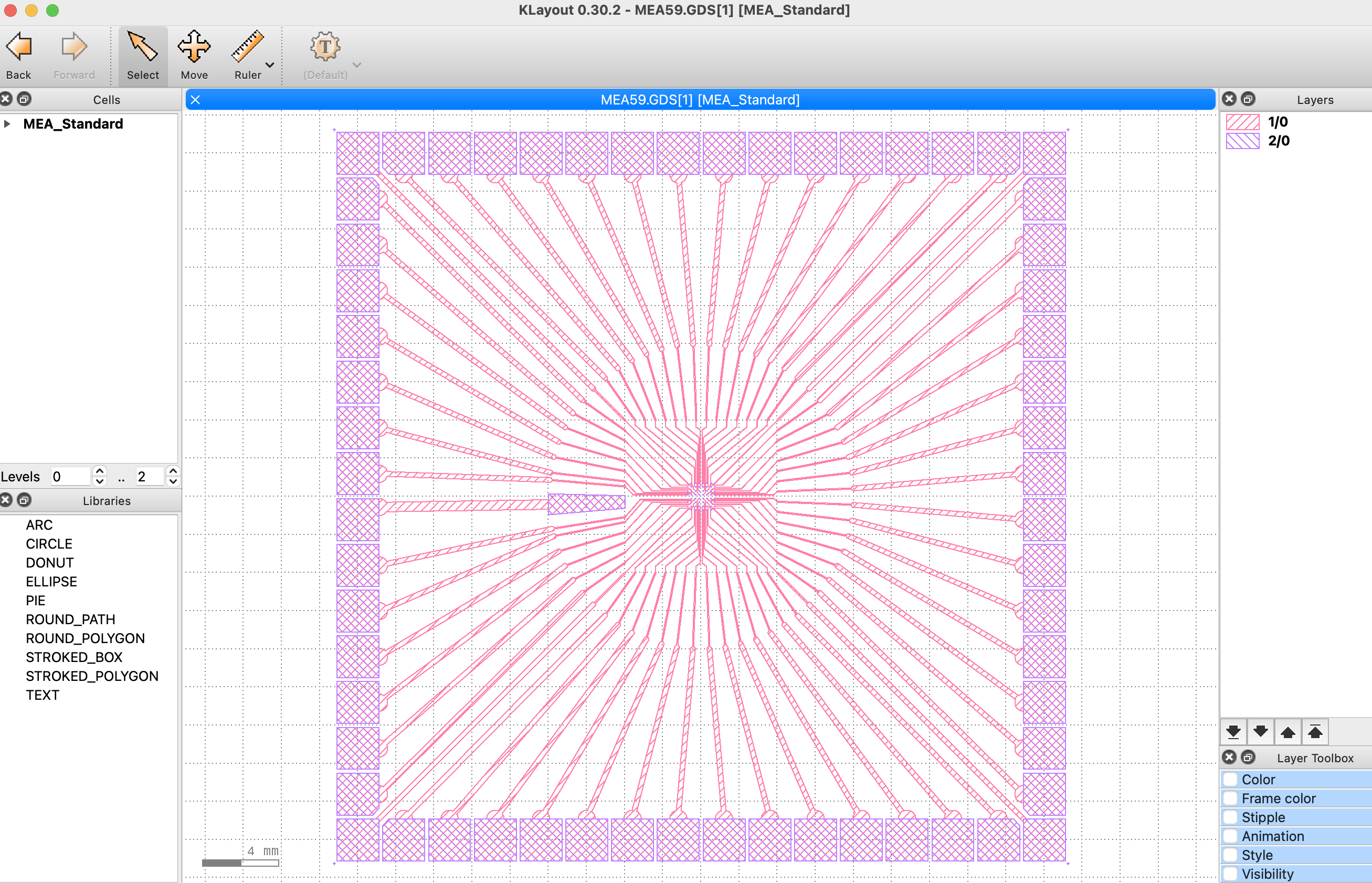
Iteration 3. Using existing MEA design files provided by Mind-in-Vitro, openable in Klayout.
Most promising: Laser-induced graphene
At atopile's machine shop, we directed a laser beam at the polyimide tape, for graphene to become deposited on the surface. We are using microscope slides from frontier tower's biopunk lab run by Elliot Roth. Techniques were adapted from this porous graphene paper
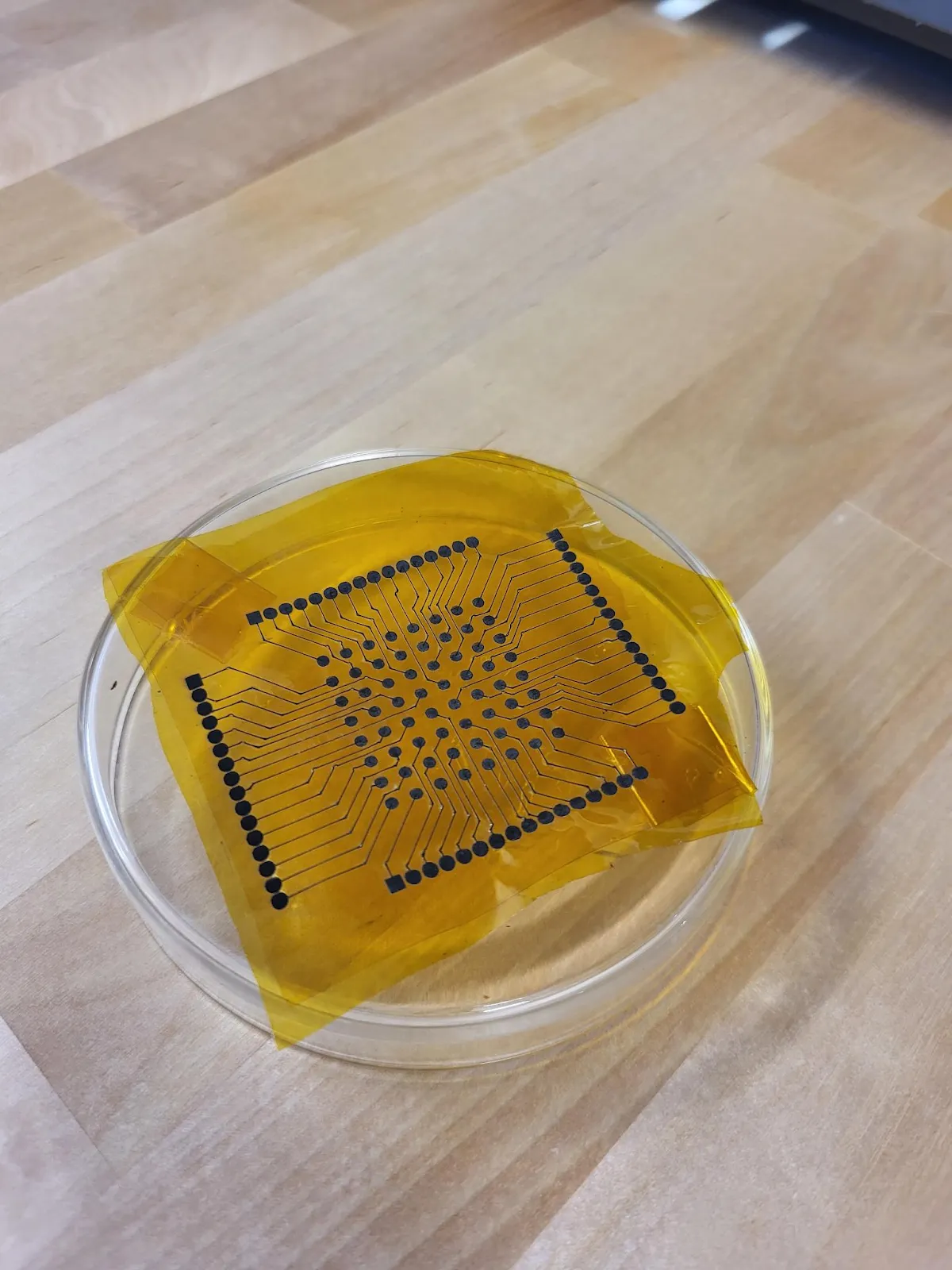
The laser’s energy causes lattice vibrations within the polyimide: Under high surface temperatures of >2 500 °C, C=O, C–N, and C–O bonds are broken, freeing non-carbon gases from this tape. The carbon atoms rearrange into graphene with its hexagonal structure.
We tuned a CO2 laser operating at 10 600 nm to 5.5W with a scanning rate of 88 mm/s with 100 lines/cm and directed the beam at the kapton tape.
The centre-to-centre distance between electrodes: 0.15 cm, with a 0.25 cm electrode radius. The trace width: 0.2 mm.
A hurdle is creating continuously conducting traces.
Trace width microadjustments
Given that SVGs are a set of lines defined using the XML format, we just made them thicker. However, in practice, laser software, e.g. Xtool or Lightburn, treat all lines as infinitely thin.
We then tried blowing up the JPGs, which are bitmaps; However, a change from 0.2 mm to 0.3 mm in the JPG led to a fuzzy visual appearance and shortcircuited. A lazy hack we found was just to duplicating the traces three times in the laser software from Xtool. Additionally, we varied the scan rate (+/- 20 mm/s) and lines per cm (max at 200, min at 50) and set the laser scanning to be monodirectional.
Examining raw trail conductivity
The triple-layered electrode version was consistently conductive. However, the graphene easily wears off, or encounters insulation at corners.
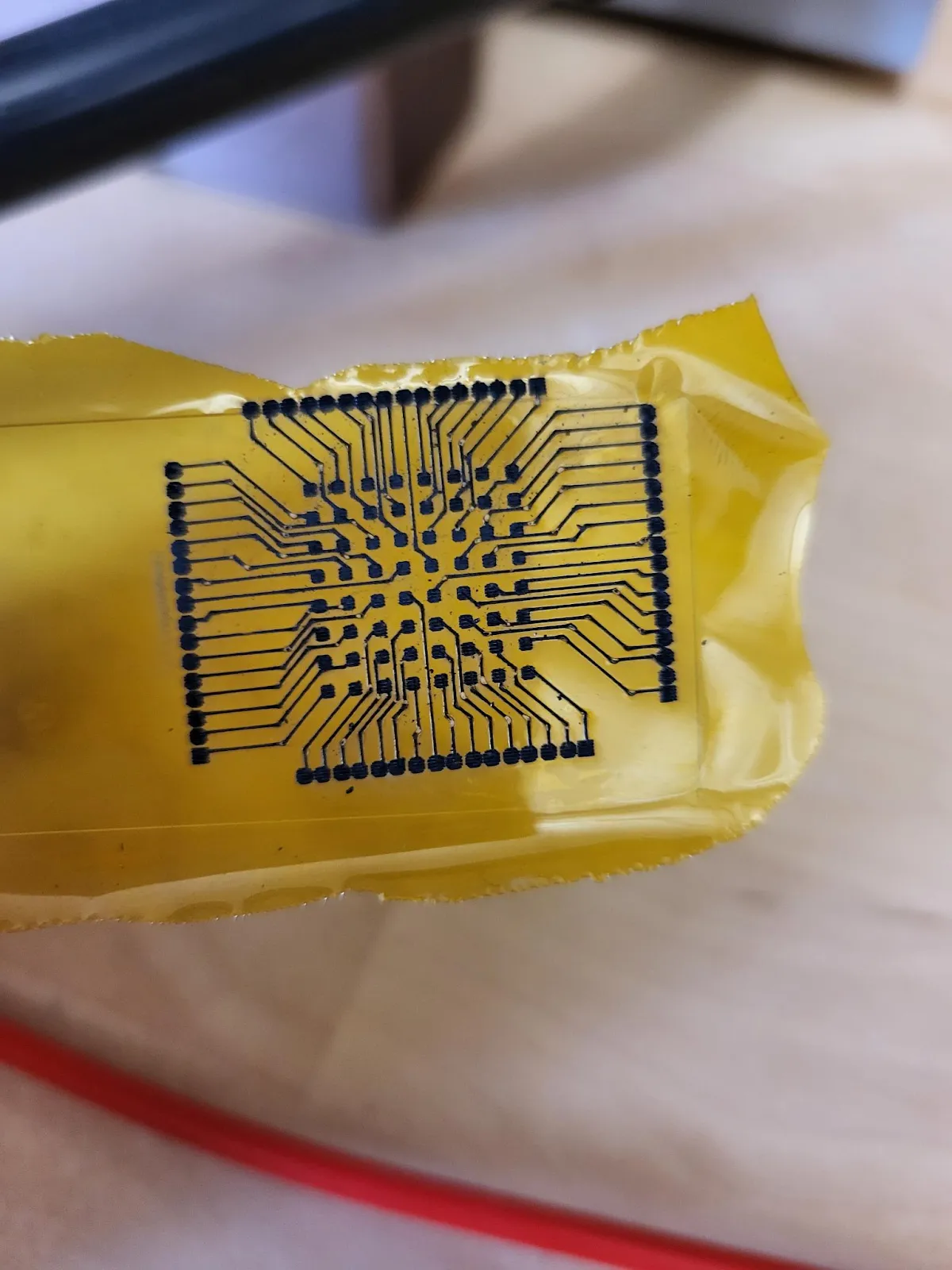
The next step would be more functional testing (saline) and compare to the standard Utah array.
2. Accidental discovery: Aluminum vapour deposition
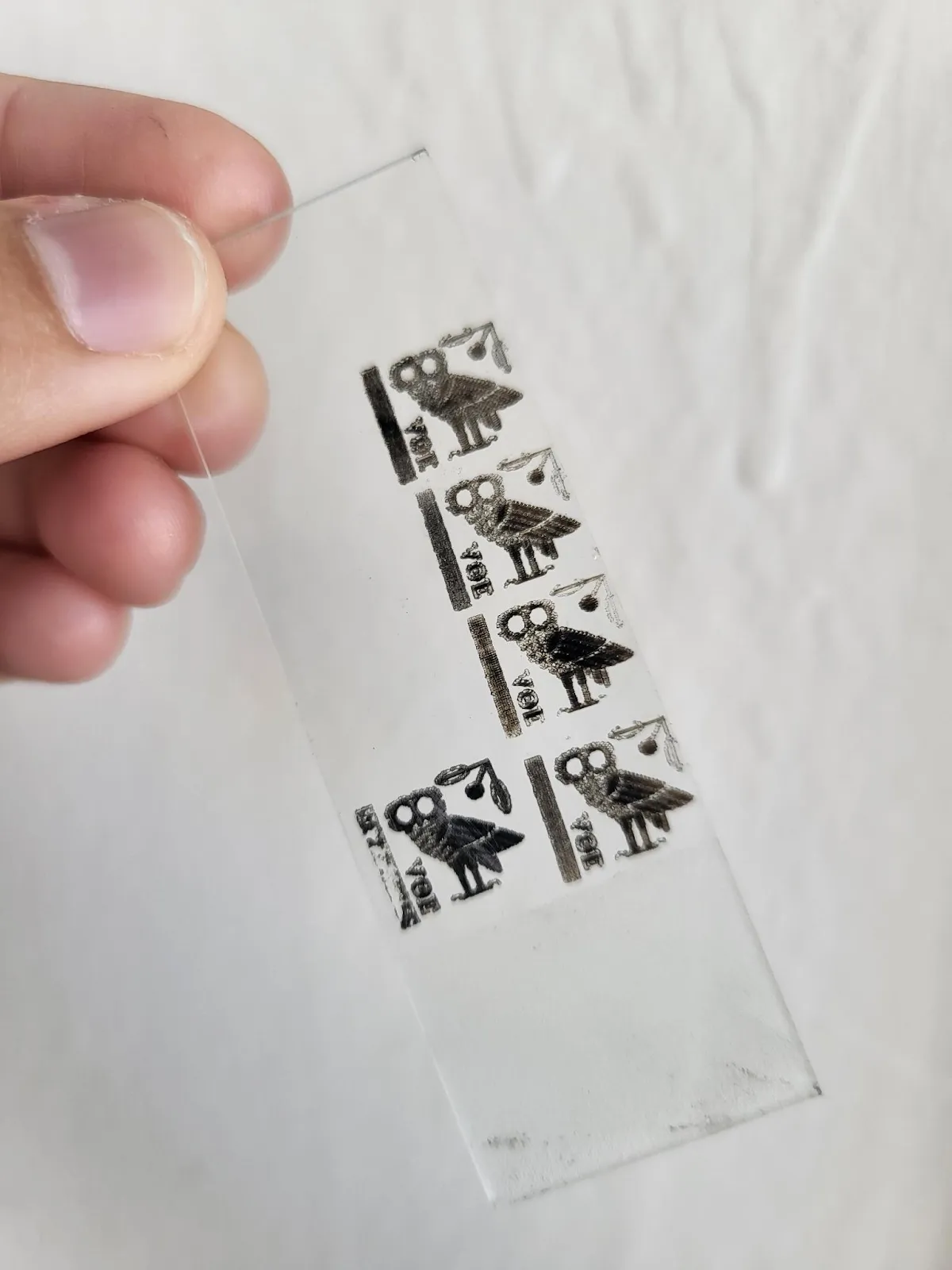
While implementing laser-induced graphene, we noticed dense metallic stripes appeared on glass--This certainly didn’t look like graphene. So we peeled off the kapton tape, put the glass slide into the laser chamber and turned the laser on again. This was in fact, the vapour from the underlying sheet of aluminum which had been sitting inside the glass in a diode-pumped solid state laser (DPSS) of 1064 nm (physical vapour deposition).
3. Error-prone: Copper metalization.
Review: In the traditional electroplating process, an object, the cathode, becomes coated with a thin layer of metal.
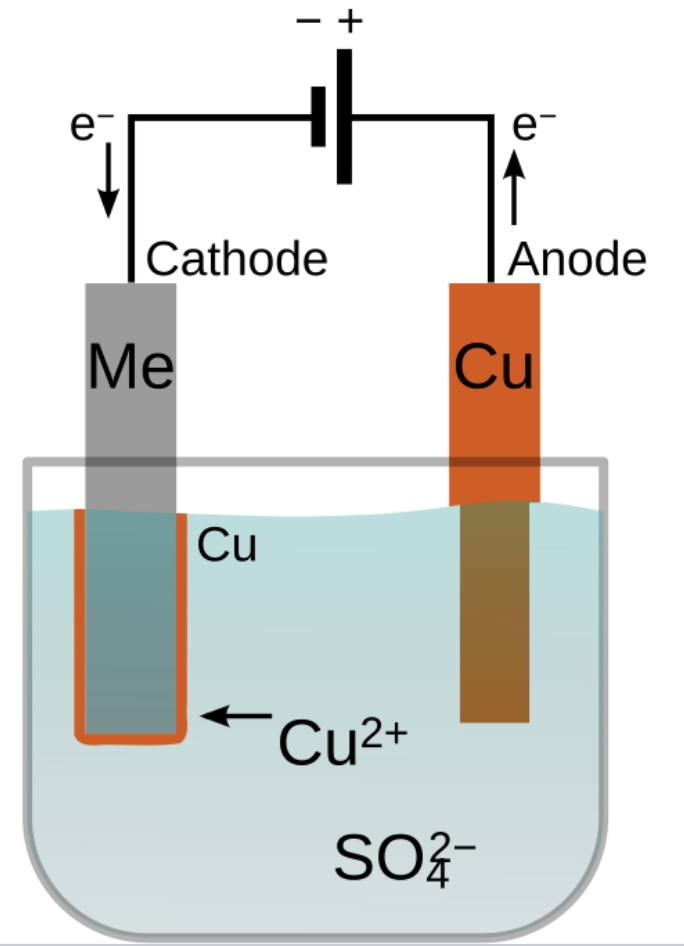
The cathode and the anode are initially submerged in ionic solution and a circuit is completed. When the battery applies its gradient, two processes happen:
- Chemical. The +ve ions start migrating to the cathode to coat it
- Electrical. The cathode "craves" electrons and the electrons move to the cathode. Simplified copper reaction: Cu²⁺ + 2 e⁻ → Cu(s).
In copper plating, a focused laser beam mimicks the voltage differential like a battery. As it is directed at the copper solution, it causes a thermal gradient: Heated and unheated surfaces. The heated area gains copper under the plate.
Results of the deposition
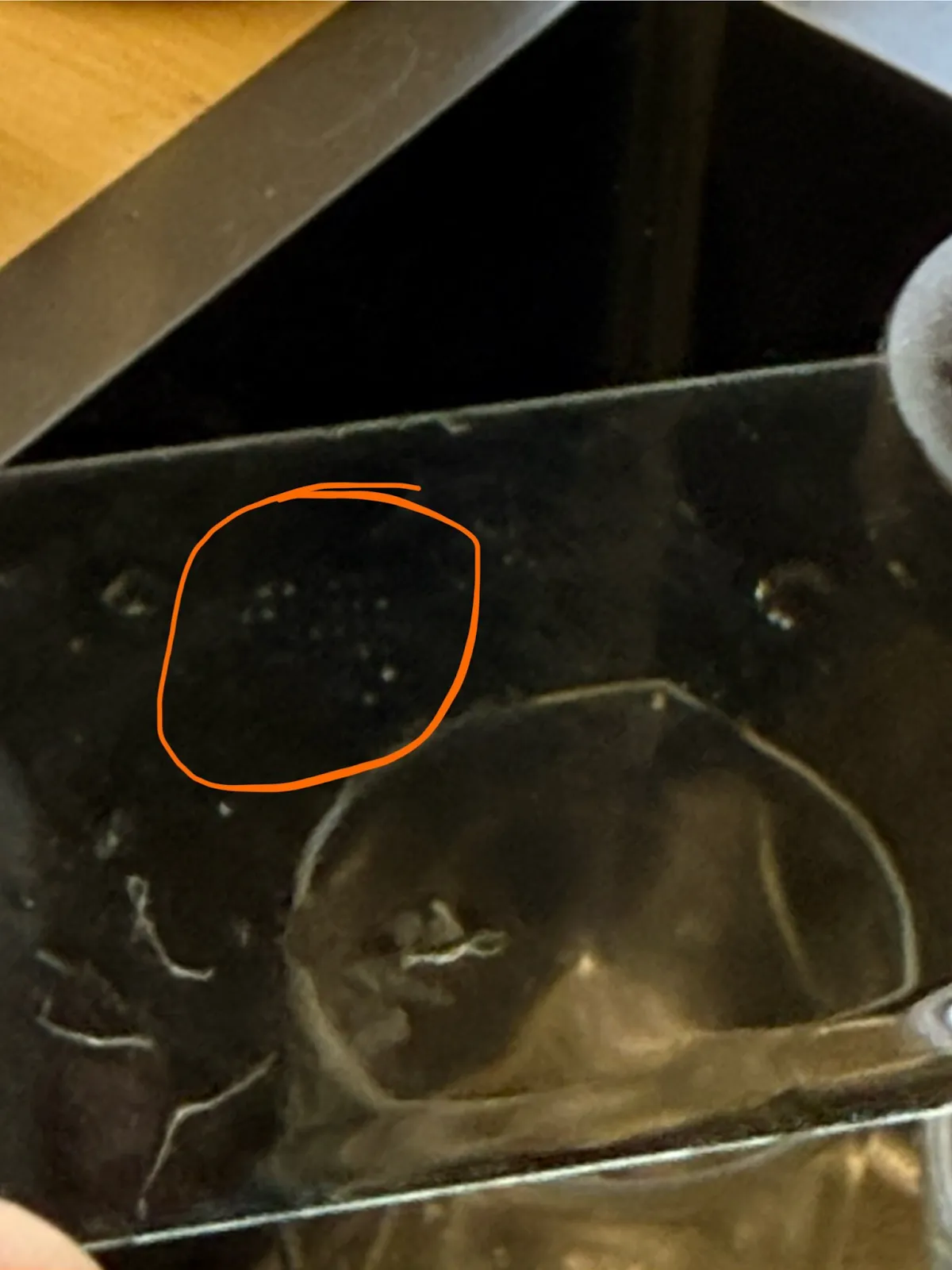
Preparing the electroplating solution
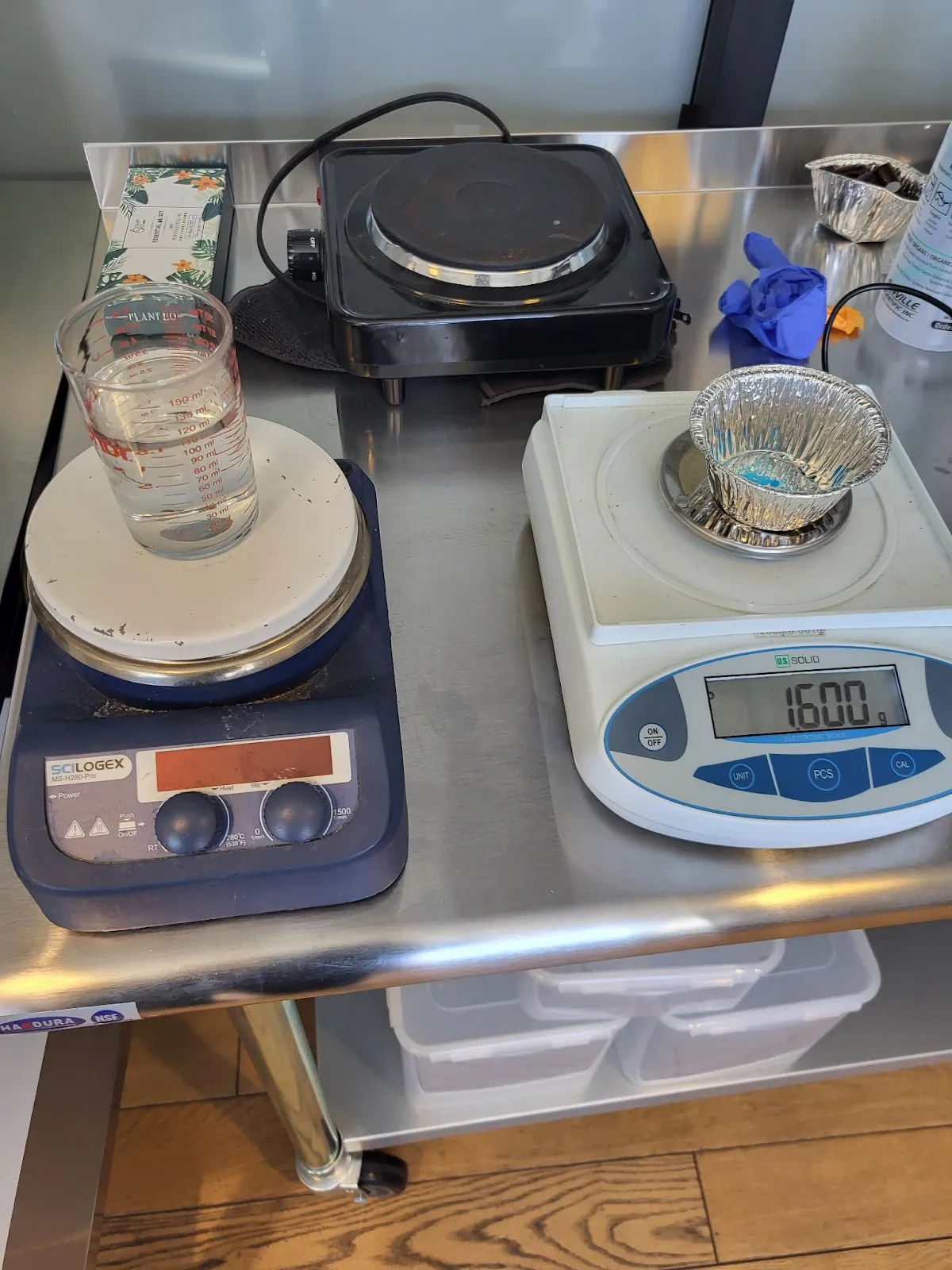
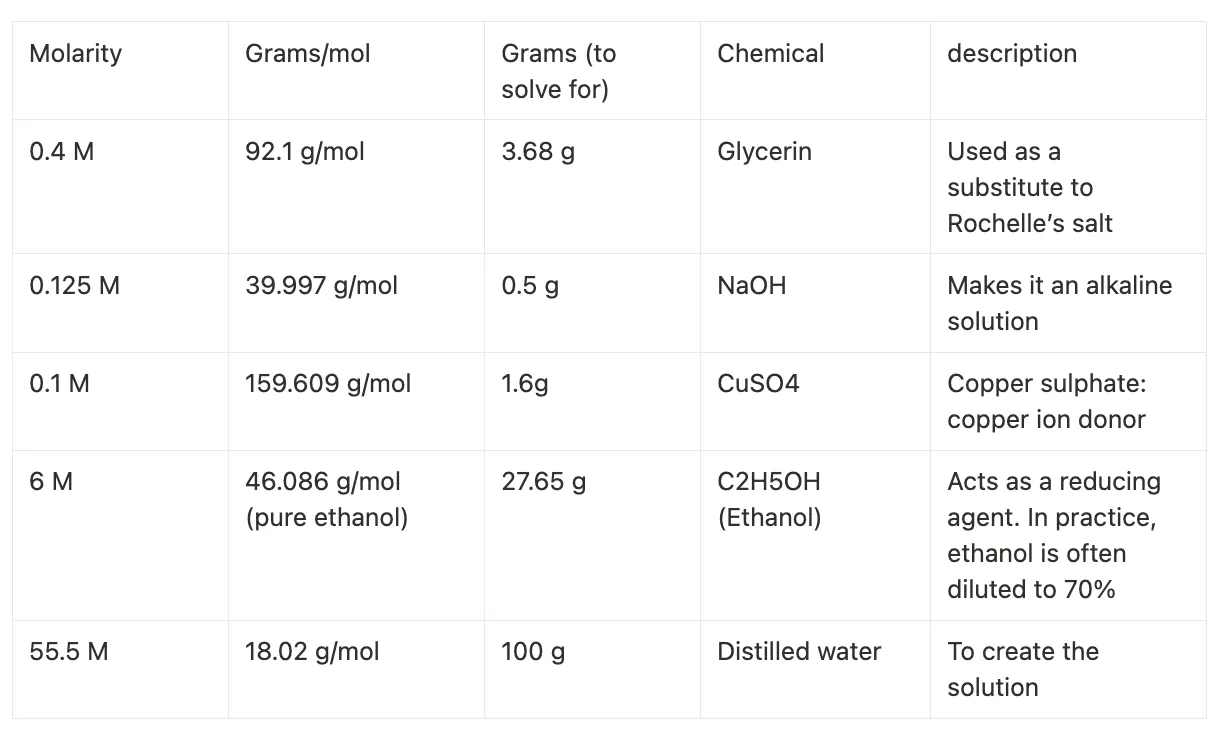
Add water first, and then add chemicals slowly from least reactive to most. i.e. Add distilled water, followed by alcohol, glycerin, NaOH and then CuSO4.
We placed the solvent on a hot plate, with a magnetic rod for stirring.
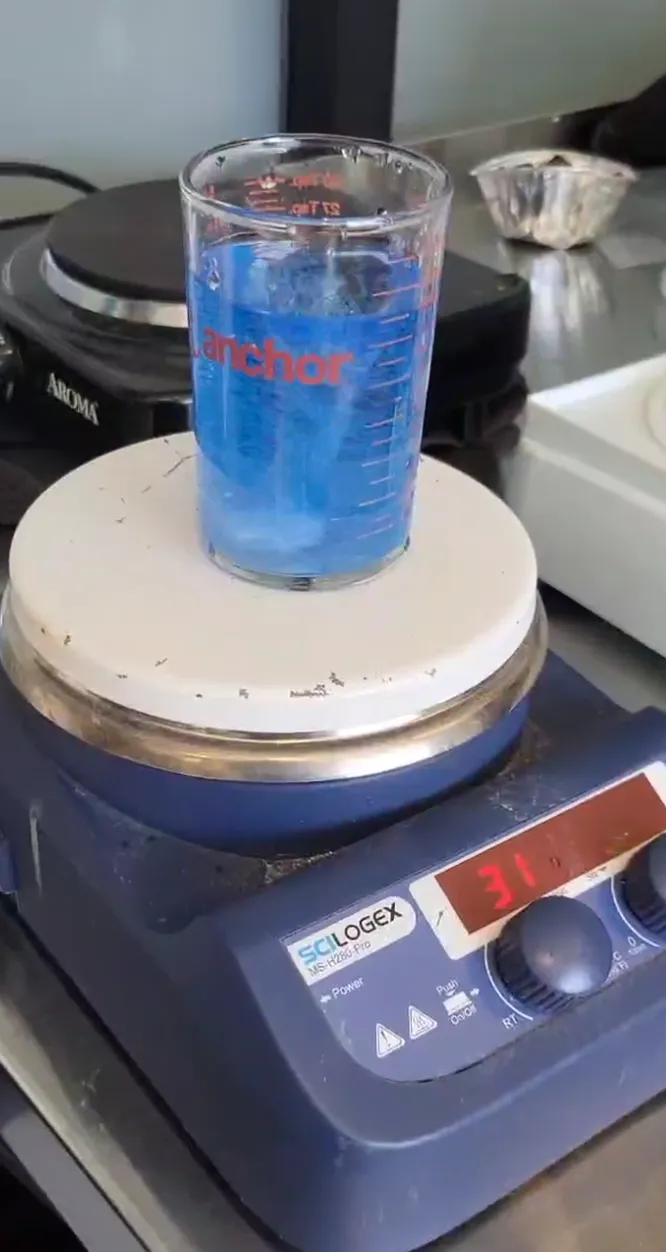
The biggest challenge here was when the scale started tweaking. We became suspicious when the 100 mL of water weighed 125 grams. Consequentially, in our 2nd copper replication attempt, the copper solution instantly precipitated into copper hydroxide--a cloudy, turquoise colour, not what we want! The ideal solution should look transparent, dark blue.
We tried a series of quick troubleshooting e.g. switching power supplies, using different scales, but there weren’t matching power supplies of 9V for any other scale in the lab.
Thus, I poured in some ethanol (1 mL of ethanol was 0.789 grams) to see how much the scale was off by--approximately 29.5875 grams. From then on, we performed everything according to the scale’s offset mass (1.25x). This method has been time-intensive and prone to error.
4. Not tested: PEDOT:PSS trails
Motivation. Researchers may use red and green fluorescent proteins in their living neurons which includes filtering colours. So the yellow polyimide tape may present dark under a microscope. They have a perfect reason to want transparent MEAs?
Here are some materials to use (loosely inspired by this paper)
- Indium tin oxide coated borosilicate glass as substrate
- Brush-on negative insulator (1002F epoxy) - To cover the non-conductive regions
- PEDOT:PSS (PH1000 + 5 % DMSO or ethylene-glycol) - Making the surface biocompatible, although ITO is already safe.
Then, the plasma engine could increase the surface energy of glass.
Next steps.
It would be really good to replicate the entire neuronal headstage from Mind-in-Vitro to broaden the accessibility. Please get in touch yoyoyuan1729@gmail.com if you want to support this project such as by offering ephys lab spaces.
Credits:
Eigenlucy (main collaborator)
Supporters: Morgan Hough, Paul Han, Elliot Roth, Lucas Mair, James Mavo at frontier tower, San Francisco as well as Atopile for letting us use their office.
Funding: 1517 Medici project, merge grant, Lucas Chu and individual donors.
Related links from Yoyo's bookshelf
- Neuropixels go ultra | Nature Neuroscience
Thank you for visiting nature.com. You are using a browser version with limited support for CSS. To obtain the best... - Flexible Thin‐Film Neural Electrodes with Improved Conformability for ECoG Measurements and Electrical Stimulation - Imai - 2023 - Advanced Materials Technologies - Wiley Online Library
School of Life Science and Technology, Tokyo Institute of Technology, B-50, 4259 Nagatsuta-cho, Midori-ku, Yokohama,... - Frontiers | Open and remotely accessible Neuroplatform for research in wetware computing
Citation numbers are available from Dimensions University of Essex, United Kingdom University of Pisa, Italy Johns... - Timoleon (Timos) Moraitis on X: "@nvidia Link to the paper: https://t.co/JzzYO6WKjW" / X
To view keyboard shortcuts, press question mark View keyboard shortcuts Messages Home Explore Notifications Messages... - Timoleon (Timos) Moraitis on X: "AI hardware systems such as @nvidia's GPUs are a true marvel of technology. Extremely complex structure that also harnesses enormous amounts of energy. That is because modern AI algorithms involve multiple functions, and GPUs implement those over multiple physical components. https://t.co/tQG25IEvdZ" / X
To view keyboard shortcuts, press question mark View keyboard shortcuts Messages Home Explore Notifications Messages... - Towards a “universal translator” for neural dynamics at single-cell, single-spike resolution
This is experimental HTML to improve accessibility. We invite you to report rendering errors. Use Alt+Y to toggle on...